
Local travel
How to book a reliable taxi in Southampton
A practical checklist for giving the operator the details that matter.
Read the guide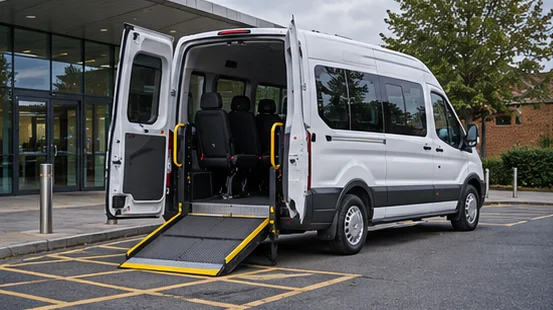
Accessible travel
Discuss boarding, wheelchair fit and pickup access before travel.
Tell the operator whether you intend to transfer to a passenger seat or remain in the wheelchair. If helpful, provide the wheelchair type and dimensions, including any extensions. State what equipment and how many companions are travelling.
Ask about boarding clearance and any relevant weight or dimensional limits. If travelling in the chair, check its suitability for transport and whether the vehicle’s restraint arrangement is compatible. Seek the operator’s confirmation before relying on the journey.
Choose pickup and drop-off points with room for boarding. At stations, airports and cruise terminals, coordinate taxi timings with any separately arranged passenger assistance. If you need help, describe the practical assistance you want and confirm what can be provided.
Focus on practical boarding, seating and equipment requirements. You can ask the operator how it handles information before sharing any sensitive details. Keep your agreed arrangements with your travel itinerary.
A suitable outbound pickup does not guarantee the return has enough boarding space or the right arrangements. Check both addresses, especially if the return is after an event or involves a different vehicle. Confirm who to contact, where to wait and whether any equipment or companions will be different.
Include the date, route, total passenger count, whether you will stay in your wheelchair, any dimensions relevant to boarding and whether you want help at either end. Ask for confirmation of the vehicle, boarding method and pickup space. If travelling with a companion, confirm whether their seat and any additional equipment have been accounted for.
A vehicle may be suitable in principle and still need space beside or behind it to deploy equipment. Tell the operator if a place has a steep slope, a narrow approach, a busy kerb or gated access. Ask whether a nearby agreed pickup point would be easier and check how you would reach it. If travelling to an appointment, speak with the venue about its most practical accessible entrance.
The relevant measurements depend on the chair and on how it will travel. A powered chair may need additional room to turn, and the operator may need weight information to check boarding equipment. A folding manual chair may be carried separately if you prefer to transfer and there is room for it. Confirm the plan for your specific wheelchair before committing.
For a rail, flight or cruise connection, confirm the separate assistance arrangements directly with the transport provider. Give the taxi operator the point where you expect to meet and a realistic window for getting there. If delays are possible, ask who can update the pickup time and what to do if the assistance meeting point changes.
Save confirmation in a format that works for you. Include the pickup point, contact number and boarding arrangements, and share the itinerary with anyone who will meet you. If the operator proposes a change of vehicle, ask it to confirm the same requirements against the replacement before you rely on the new plan.
Describe what you would like the driver to do. You might prefer instructions before moving equipment, room for a companion to help, or time to board at your own pace. Practical preferences are often more useful to a transport operator than a diagnosis or other medical history.
Accessible Southampton visitor information
View the related taxi serviceLocal travel
A practical checklist for giving the operator the details that matter.
Read the guideCruise travel
Match your road journey to the ship, terminal and embarkation slot.
Read the guideAirports
Build the road leg around the correct terminal and airline deadlines.
Read the guideYour next journey
Put your route, timing and travel requirements together in one enquiry.